
The Short Answer
Stop pressing the opener button, keep everyone away from the door, and do not try to pull, push, or pry the door back into its tracks yourself. A door off its track is being held up by rollers, cables, and springs that are no longer working together the way they're designed to, and any one of them can let go without warning. Leave the door exactly where it is and call for repair.
That's the part that keeps people safe in the next five minutes. The rest of this is about why it matters and what happens after you make the call.
What Actually Goes Wrong When a Door Jumps Its Track
A garage door rides on rollers that travel inside two vertical and two curved horizontal tracks. When everything is aligned, the weight of the door is distributed evenly and the springs do the heavy lifting. A door comes off its track for a few common reasons:
- A roller breaks or wears out and drops out of the track, leaving that corner of the door unsupported.
- A track bracket loosens or bends, often from years of humidity swelling the wood jamb it's mounted to, letting the whole track shift out of position.
- A cable snaps or frays, usually on one side, which pulls the door unevenly and forces it sideways off the rollers.
- Something strikes the door — a car bumper, a wind gust during a storm, a kid's bike — hard enough to knock a panel out of alignment.
- A spring breaks under tension and the sudden loss of counterbalance lets the door drop or twist unevenly as it falls.
Any of these can happen on their own, but in this area they compound. Humid summers and heavy afternoon downpours swell wood door frames and jambs, which puts slow, constant pressure on track brackets. Add a hurricane-season wind event and a door that was already slightly out of alignment can get pushed hard enough to pop a roller or bend a track outright. By the time you notice the door hanging crooked or refusing to move, the hardware has usually been working against itself for a while.
How Bad Is It, Really?
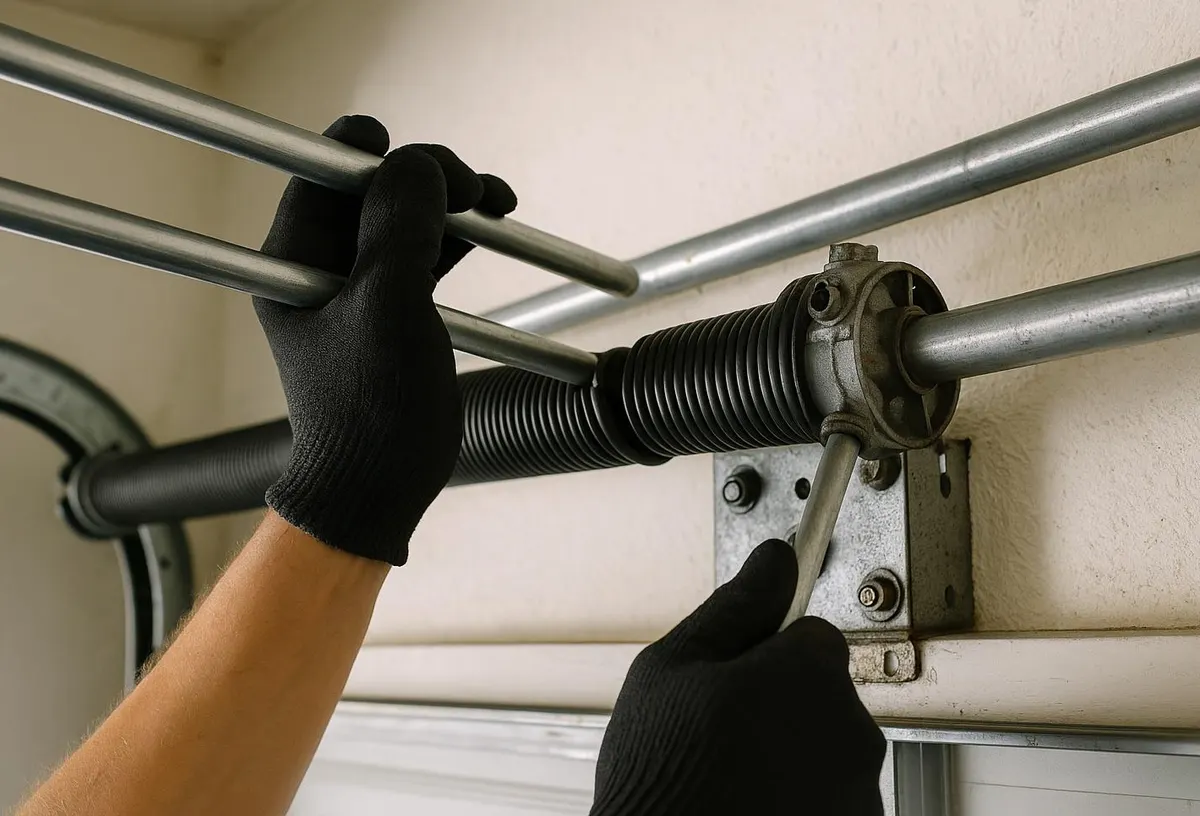
It depends on what let go, but none of the scenarios are mild. A door off its track is no longer supported the way it's engineered to be. If it's a torsion spring door, the spring is still under enormous tension — hundreds of pounds of force stored in a coiled spring, whether the door is open, closed, or stuck halfway. If a cable has snapped, the door may be held by a single point of contact that can give way with no warning. If a roller has come out, the panel can rack sideways and bind, or it can slip further and fall. None of these are something to test by hand.
The real danger isn't just the door itself — it's a sudden release of stored tension. Springs and cables under load behave like a loaded spring trap. People have been seriously hurt trying to muscle a door back into alignment because it looked like a simple fix.
What to Do Immediately
- Stop using the opener. If the door is partway open or closed, leave it. Running the motor against a misaligned door can bend the track further, strip the opener's drive gear, or snap a cable that's already under strain.
- Disconnect the opener if you can do it safely. Most openers have a manual release cord (usually a red handle) that disconnects the trolley from the door. Only pull this if the door is resting flat on the ground or is otherwise stable — if it's hanging at an angle, skip this step and leave the opener connected so it isn't the only thing between you and a falling door.
- Clear the area. Move cars, bikes, and people out from under and in front of the door. Keep kids and pets away from the garage until it's repaired.
- Block off the opening if the door won't close. A door stuck open overnight is a security and weather problem — with fall storm season bringing wind-driven rain, an open bay can let in a lot of water fast. A tarp or temporary barrier is fine; don't use it as an excuse to force the door shut.
- Look, but don't touch, the obvious damage. Note which side the door is off on, whether a cable is visibly snapped or frayed, and whether a spring looks broken (a torsion spring will often show a visible gap where it's split). This helps the technician diagnose faster, but don't reach into the tracks or touch the springs.
What Not to Touch
- Don't touch the springs, torsion or extension. They store enough force to cause serious injury if they shift while you're near them.
- Don't cut or pull on a frayed cable. It's under tension even when it looks slack.
- Don't try to lever the door back onto the track with a pry bar or your hands. This is the single most common way people get fingers or hands caught between a roller and a track.
- Don't keep pressing the opener remote hoping it'll reset. It won't, and you risk burning out the motor or stripping gears, which turns a repair into a replacement.
When to Call Mountain Brook Garage Door
This is a same-day call, not a wait-and-see situation. When you call Mountain Brook Garage Door for a door off its track, a technician will assess which component failed — roller, cable, track, or spring — and handle it with the right equipment to safely release and reset tension before touching anything else. If a torsion spring has broken, that gets handled as a full Spring Replacement, since springs are sold and installed in matched pairs for a reason: one new spring paired with one old, fatigued one puts uneven load right back on the door. If it's a bent track, worn rollers, or a snapped cable, that falls under standard Garage Door Repair, and we'll also check the opener's travel limits and force settings afterward, since a door that's been fighting its tracks often throws those off even after the mechanical issue is fixed.
If you're in Mountain Brook, Homewood, Vestavia Hills, Crestline, or anywhere nearby and your garage door has come off its track, don't wait on it — call Mountain Brook Garage Door today and we'll get a technician out to make it safe and get it moving again the right way.